


 Kaloud
 KLIFIDES
 marvin smoke
 DARKSIDE



Follow us
@shanti_en
+420 533 534 201
(Mo-Fr: 8-12 and 13-17)
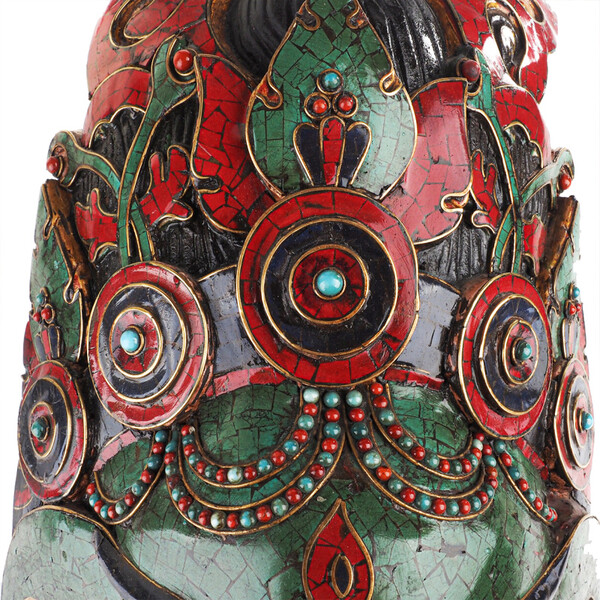
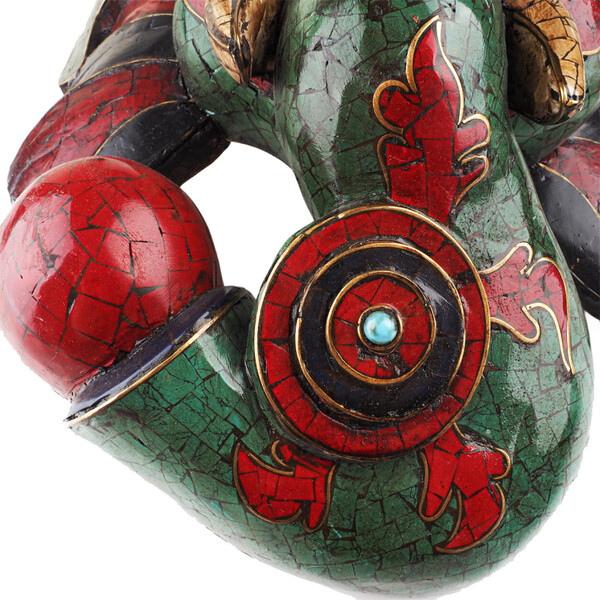
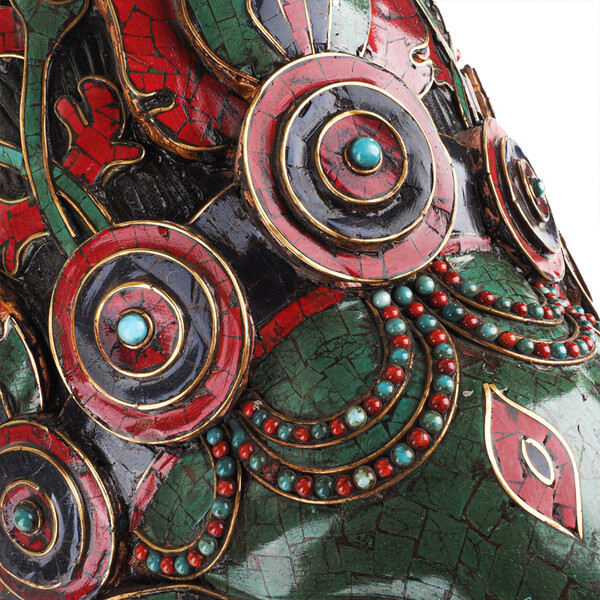
A wooden mosaic mask of Ganesha symbolizes wisdom, prosperity, and the overcoming of obstacles.
Show more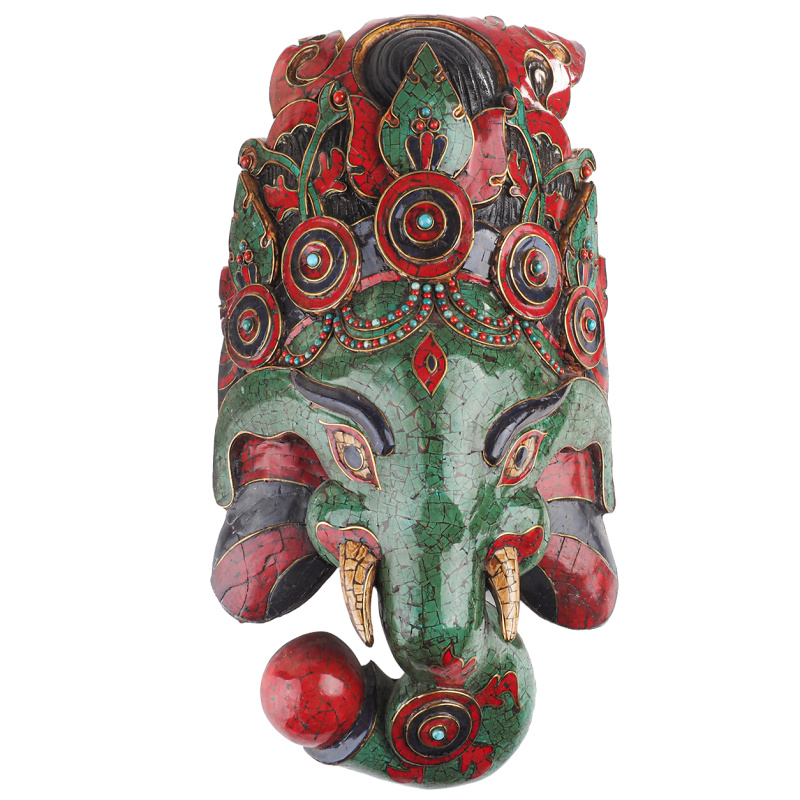
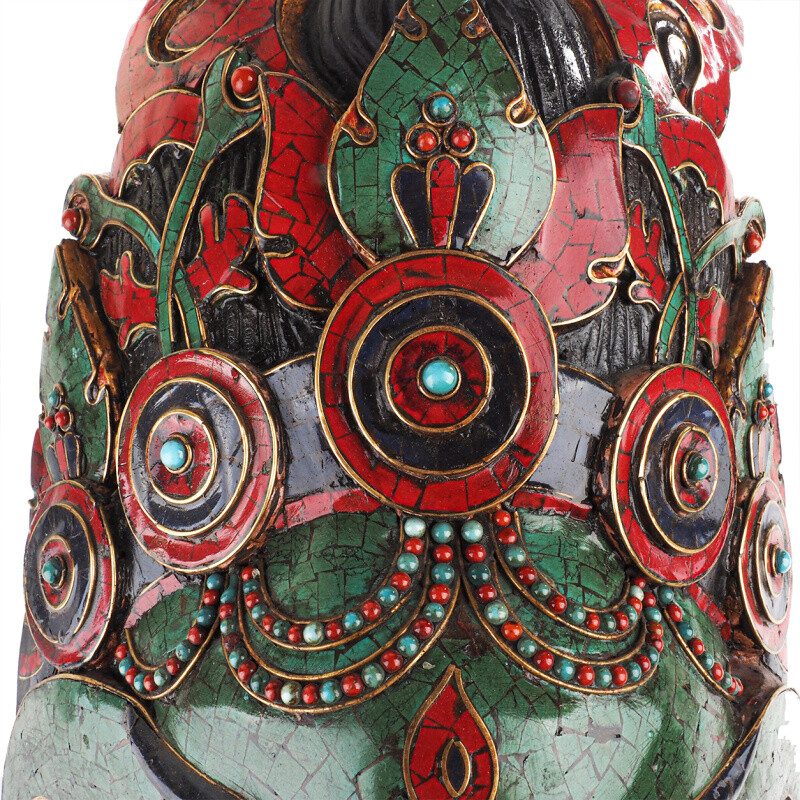
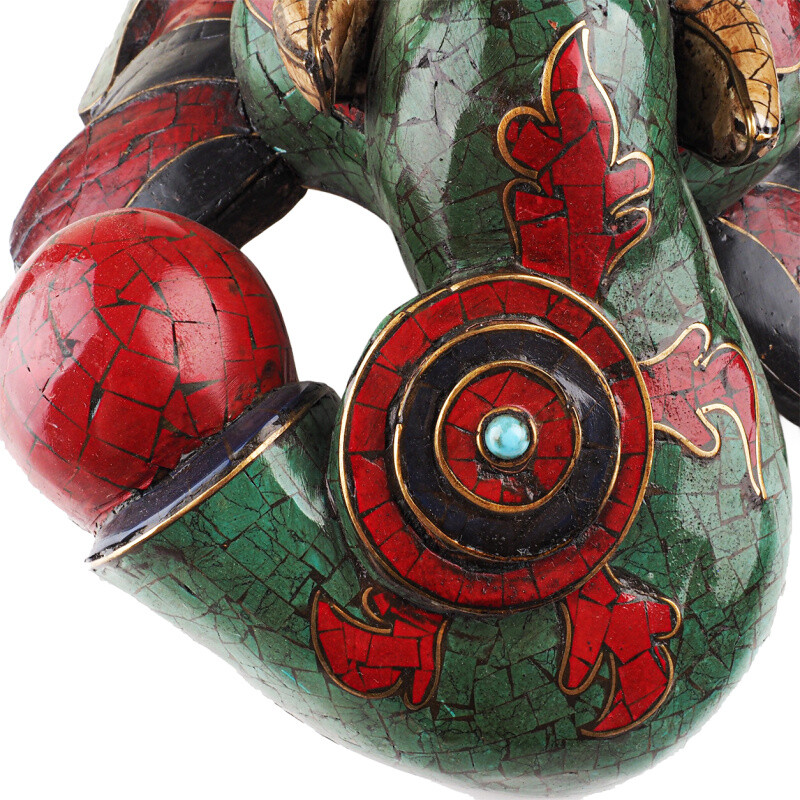
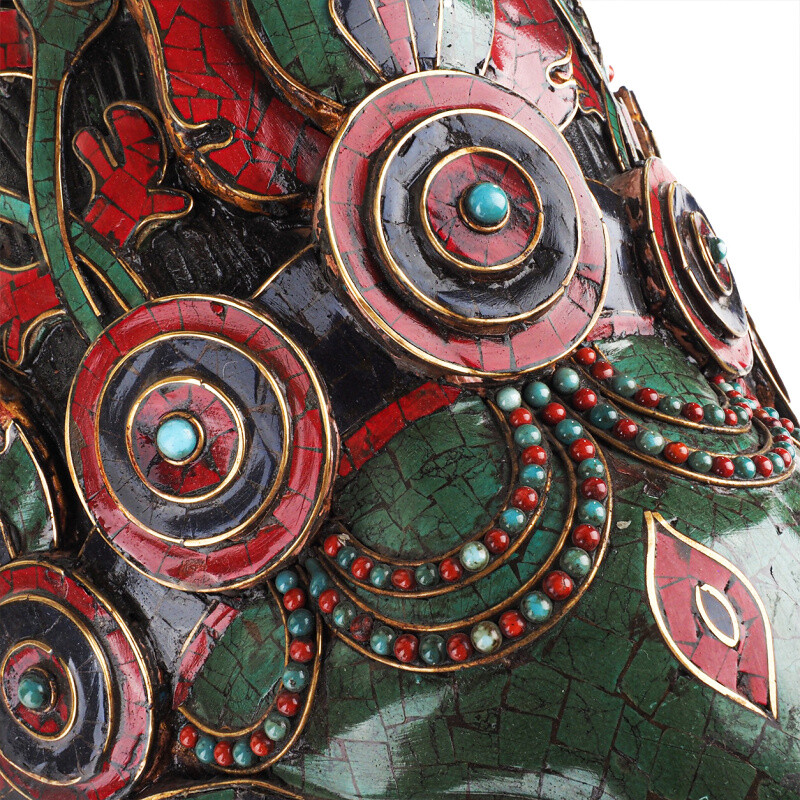
Ganesh wall mask is carved from wood and decorated using a mosaic technique, where small affixed pieces create a unique surface. The green elephant face with a long curved trunk and prominent tusks is complemented by a richly decorated crown with ornaments, circular embellishments, and details in red, black, and gold. Individual elements are accentuated by metallic trims in a golden hue.
Ganesha (Sanskrit: Gaṇeśa), also known as Ganapati, is one of the most beloved Hindu deities. He is the son of the god Shiva and the goddess Parvati, and is instantly recognizable by his elephant head and human body. In the Hindu tradition, he is revered as the protector of the home, and the patron of education, wisdom, and auspicious beginnings. People turn to him especially when facing an important decision, a new chapter in life, or an obstacle they need to overcome.
Several important symbols are associated with Ganesha:
According to one of the most well-known Hindu legends, the goddess Parvati created a boy from the paste she rubbed off her body while bathing and breathed life into him. She named him Ganesha and tasked him with guarding the entrance to her chambers. When her husband Shiva returned, however, Ganesha refused him entry on his mother's orders. Shiva did not know who the boy was, and during the confrontation, he cut off his head.
When Parvati discovered what had happened, her grief and rage compelled Shiva to restore Ganesha to life. He replaced the original head with that of an elephant, accepted him as his son, and granted him a place of honor among the deities.
The elephant head itself carries deep symbolism. The large ears serve as a reminder of the importance of listening, while the long trunk represents the ability to adapt to different situations and overcome obstacles. The elephant is also associated in Indian tradition with intelligence, patience, and a strong memory.
Ganesha thus became one of the most revered Hindu gods – a symbol of wisdom, new beginnings, and the overcoming of obstacles. To this day, people turn to him before important life decisions or at the start of a new journey.
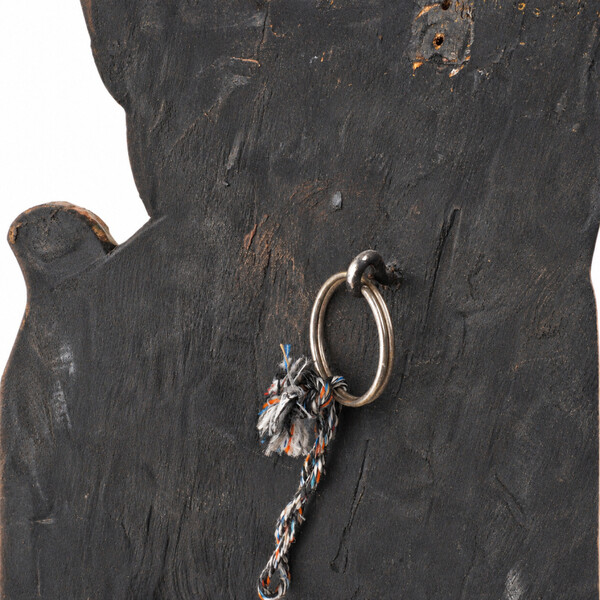
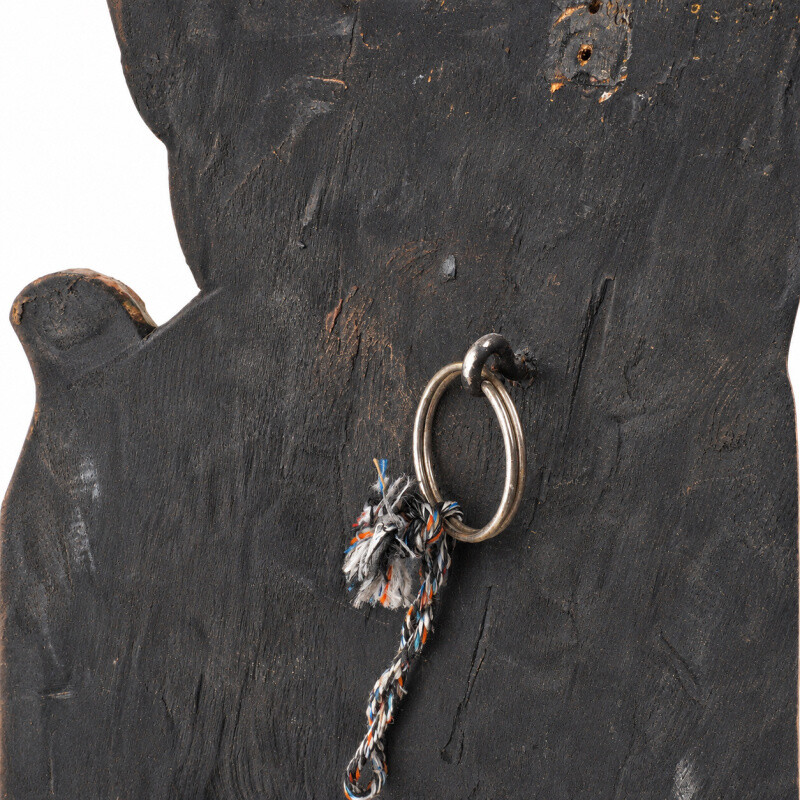
Wall mounting – the back of the mask is fitted with a hanging loop.
A wooden mosaic mask of Ganesha symbolizes wisdom, prosperity, and the overcoming of obstacles.
Hand-carved Nepali sun and moon mask – a symbol of opposites. Traditional decoration made from natural wood, 20 cm in diameter.
Richly decorated wooden Garuda mask made in Nepal. Discover the power of the legendary king of birds, a symbol of protection, courage, and freedom.
The wooden mosaic Garuda mask evokes the power of the mythical protector — a symbol of courage and freedom.
Wooden Garuda mask - a symbol of protection and strength, featuring intricate hand carving and striking horns.
A large wooden Ganesh mask featuring vibrant colors and intricate carving. A striking wall decoration rich in symbolism of wisdom and prosperity.
Wooden mask of the sun and moon, for hanging on the wall, size 39 cm
Wooden Ganesh mask with vibrant colors and an ornately decorated crown - a benevolent guardian of the home. A symbol of wisdom, prosperity, and new beginnings.
Large wooden Buddha mask with a golden face and intricate decorations. A symbol of spiritual awakening, inner harmony, and the path to enlightenment.
Large wooden Garuda mask with horns and a snake in its beak. A striking wall decoration symbolizing protection, courage, and strength.
Vše v pořádku
„Velice rychlé dodání!“
„velice rychlé dodání kvalitního zboží“