


 Kaloud
 KLIFIDES
 marvin smoke
 DARKSIDE


Follow us
@shanti_en
+420 533 534 201
(Mo-Fr: 8-12 and 13-17)
Traditional Balinese sarong featuring a hibiscus and plumeria print on a red background
Show more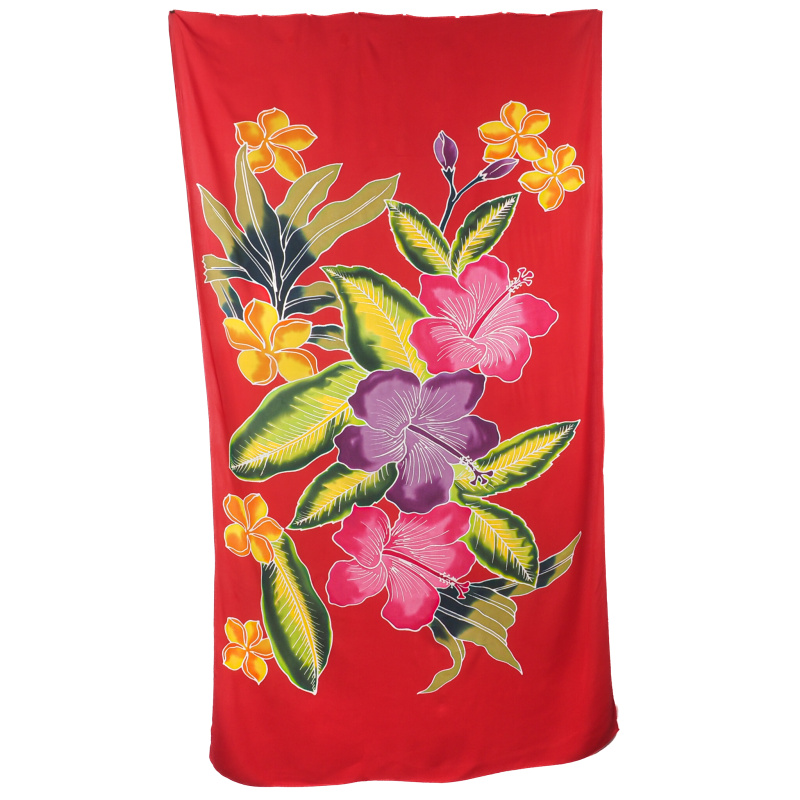
Let yourself be wrapped in a beautiful sarong, handcrafted for you by skilled artisans in Bali, Indonesia, using traditional methods. Choose your unique piece. You'll stand out wherever you go — not just on the beach or by the pool.
If you're looking for a truly versatile fashion accessory, a sarong is the perfect choice. The ways you can wear one are almost endless. Use it as an eye-catching wrap skirt or a light, elegant dress tied in countless different ways. On hot days, a sarong is the ideal garment — it feels wonderful against the skin, airy and breathable. In cooler weather, it works beautifully as a scarf or a light blanket. Spread it out for a picnic, or use it as a unique and striking piece of home décor.
Bali, known as the "Island of the Gods", is home to a stunning and diverse flora. Flowers hold deep significance in various ceremonies, rituals, and celebrations. Floral patterns are therefore among the most beloved motifs used to decorate sarongs. In Balinese culture, flower symbols represent purity, beauty, life, and the transient nature of existence.
Hibiscus is a sacred flower dedicated to the gods Ganesha, Shiva, and the goddess Kali. Its blooms symbolize purity, refinement, elegance, and perfection.
Plumeria — known in Bali as frangipani or Jepun — expresses, through its five petals, the interconnectedness of all living beings with the universe. The frangipani flower represents the five elements of the universe: earth, water, fire, air, and ether.
Colors carry deep-rooted symbolism in Balinese culture and play a significant role in daily life — something clearly reflected in traditional Balinese clothing.
Red is associated with the god Brahma, the creator, and expresses creativity and courage. Red is an incredibly powerful color. It is the color of life itself, of love, fire, and blood — it boosts energy and vitality. Red symbolizes the root chakra, the foundation of our sense of reality and our overall life force.
Bali is renowned for its rich and vibrant culture, and clothing is undeniably woven into the heart of it. The sarong and its feminine counterpart known as kamben form an essential part of traditional Balinese dress — whether for religious and ceremonial occasions or everyday life.
Clothing in Bali is not merely about fabric and style — it is seen as a visual language. The forms and patterns of sarongs speak volumes about those who wear them and the communities they come from. Each region of Indonesia takes pride in its own distinctive motifs, reflecting the local cultural heritage.
A carefully chosen color and a unique pattern each tell their own story. In other words, every individual thread and exceptional design serves a dual purpose: clothing does not only beautify — it also conveys a deeper spiritual message. What may appear to be an ordinary piece of fabric transforms into an embodiment of faith and tradition.
The sarong also played a meaningful role as an expression of solidarity and pride during the Dutch colonization of Bali, when wearing one became an act of patriotism and loyalty.
Sarongs continue to hold the status of a national treasure in Indonesia to this day. Wearing one is also an expression of respect and tribute to the artisans who breathed life into each piece through their handcraft.
Caring for the sarong
Hand washing is recommended.
Traditional Balinese sarong printed with plumeria flowers on a black background
Traditional Balinese sarong with a plumeria print and colorful leaves on a red background
Traditional Balinese sarong with a white print on s black background
Traditional Balinese sarong with a plumeria and leaves print on a yellow background
Traditional Balinese sarong with a delicate pattern in shades of red
Traditional Balinese sarong with a plumeria print featuring colorful leaves on a blue background
Traditional Balinese sarong with a white print all-over on a red background
Traditional Balinese sarong with hibiscus and plumeria print on a yellow background
Traditional Balinese sarong with a batik print on a red background
Traditional Balinese sarong with hibiscus and plumeria print on a blue background
Rychlost dodání
Skvělá komunikace a ochota poradit
„Nenasel jsem“
„vse ok“