November can feel long. It's dark before five, getting out from under the duvet takes willpower, and the mind tends to keep score of everything that went wrong. That makes it the perfect time to try a small habit that gently shifts your attention: every evening, write down a few things you're grateful for.
A gratitude journal needs no special equipment and no free hour. A notebook, a pen and five minutes before bed are enough. Below you'll find how to start, what to write when your mind goes blank, and how to keep going past the first weekend.
What a gratitude journal is and why it works
A gratitude journal is simply a notebook where you regularly write down what you're thankful for. It might be the warmth in a friend's voice on the phone, the first snow, or the bus that waited for you this time. The point isn't to sugar-coat anything. It's to notice things that would otherwise slip by.
This isn't just spiritual advice. Psychologists have studied gratitude practice too:
- Counting blessings. In 2003, psychologists Robert Emmons and Michael McCullough compared people who listed things they were grateful for with people who listed daily hassles. The gratitude group rated their lives more positively, felt more optimistic about the week ahead and exercised more.
- Three good things. In a study led by Martin Seligman, people wrote down three things that went well each evening for a week, and why they went well. They were happier and reported fewer depressive symptoms, and the effect was still there six months later.
- Realistic expectations. A more recent meta-analysis of 25 studies with more than 6,700 participants confirms that the effect is real but modest. A gratitude journal won't change your life overnight. It's a small shift that adds up day by day.
Why does it work? Our brains naturally hold on to problems more easily than to good moments. Writing regularly trains them to look for the good as well. And once you know you'll be writing in the evening, you start noticing good things during the day.
If you've been struggling for a long time, a gratitude journal is no substitute for talking to a professional. It can, however, be a gentle companion to it.
How to start: a notebook, a moment and a small ritual
The notebook. It doesn't need to be expensive or beautiful. The one already sitting in your drawer will do. Paper has one big advantage over your phone: no notifications pinging in to pull you away. To keep your journal from getting lost among other notebooks, mark it with the Inspirational Gratitude bookmark. It will also hold the page where you left off.
The moment. Evening works best, right before bed, when you have a whole day to look back on. If you're a morning person, write over your first cup. Nutty Japanese Genmaicha green tea is made for slow sipping and gives you a few quiet minutes. Only one thing really matters: link your writing to something you already do every day.
The ritual. A small gesture at the start tells your mind it's time to slow down. Light a candle, such as the Green Tree Gemstone Positivity candle with green tea scent or the warmer Good Energy with Palo Santo. If you prefer incense, place a stick in a lotus incense holder and try heart chakra blends from our Tibetan incense range. Tradition links the heart chakra with love and gratitude.
If you always use the same scent, over time it will start reminding you that it's journal time all by itself. You'll find more ideas in our incense collection. And just to be safe: never leave a burning candle or incense stick unattended, even when you drift off into your thoughts.
What to write in a gratitude journal: three proven methods
1. Three good things
The simplest and best-researched method. Every evening, write down three things that went well that day. Add one sentence to each about why it happened. That second part is what turns a list into a real pause.
Example: "My colleague made me a cup of tea when she saw I was falling behind. She can tell when I need a break, and I don't have to ask."
Specific beats general. "Family" written for the tenth time stops meaning anything. "Dad sent me a photo of apples from his garden" does. And people usually spark a stronger sense of gratitude than things.
2. Gratitude journal prompts for when your mind goes blank
Some evenings your head is empty. That's when it helps to pick one question and answer it. Here are twenty gratitude journal prompts:
- Who made my day easier today?
- What did I enjoy eating today?
- Which scent, sound or colour lifted my mood today?
- What worked out today, even though it looked like it wouldn't?
- What am I grateful to my body for?
- Which thing in my home makes me happy?
- Who taught me something, whether they know it or not?
- Which moment from last week still makes me smile?
- What was easier today than it was a year ago?
- Which of my skills helped me today?
- Who would I like to thank but haven't yet?
- What did I notice in nature today?
- Which difficult experience ended up teaching me something?
- Which everyday comfort am I grateful for, even though I take it for granted?
- Who made me laugh today?
- Which book, song or film has brightened my days lately?
- What do I have today that I once wished for?
- Which place gives me a sense of calm?
- What am I looking forward to tomorrow?
- What am I grateful to myself for today?
3. The gratitude letter
Every now and then, write a whole letter instead of a list. Address it to someone who did something important for you and whom you never properly thanked. In Seligman's research, a gratitude letter delivered in person had the strongest immediate effect of all the exercises tested.
The letter can stay in your journal. But if you'd like to send it, copy it into our Gratitude greeting card from the Inspirative Wishcards collection. These days, a handwritten thank-you in an envelope surprises people more than any gift.

How to stick with your gratitude journal
Starting is easy. The hard part is not giving up after three weeks. These tips help the most:
- You don't have to write every day. Psychologist Sonja Lyubomirsky found that people who counted their blessings once a week benefited more than those who did it three times a week. When journaling becomes a chore, it loses its spark. If daily entries start to bore you, switch to one longer entry on Sunday evenings.
- Keep it short. Three to five items are plenty. A long list quickly turns into mechanical box-ticking.
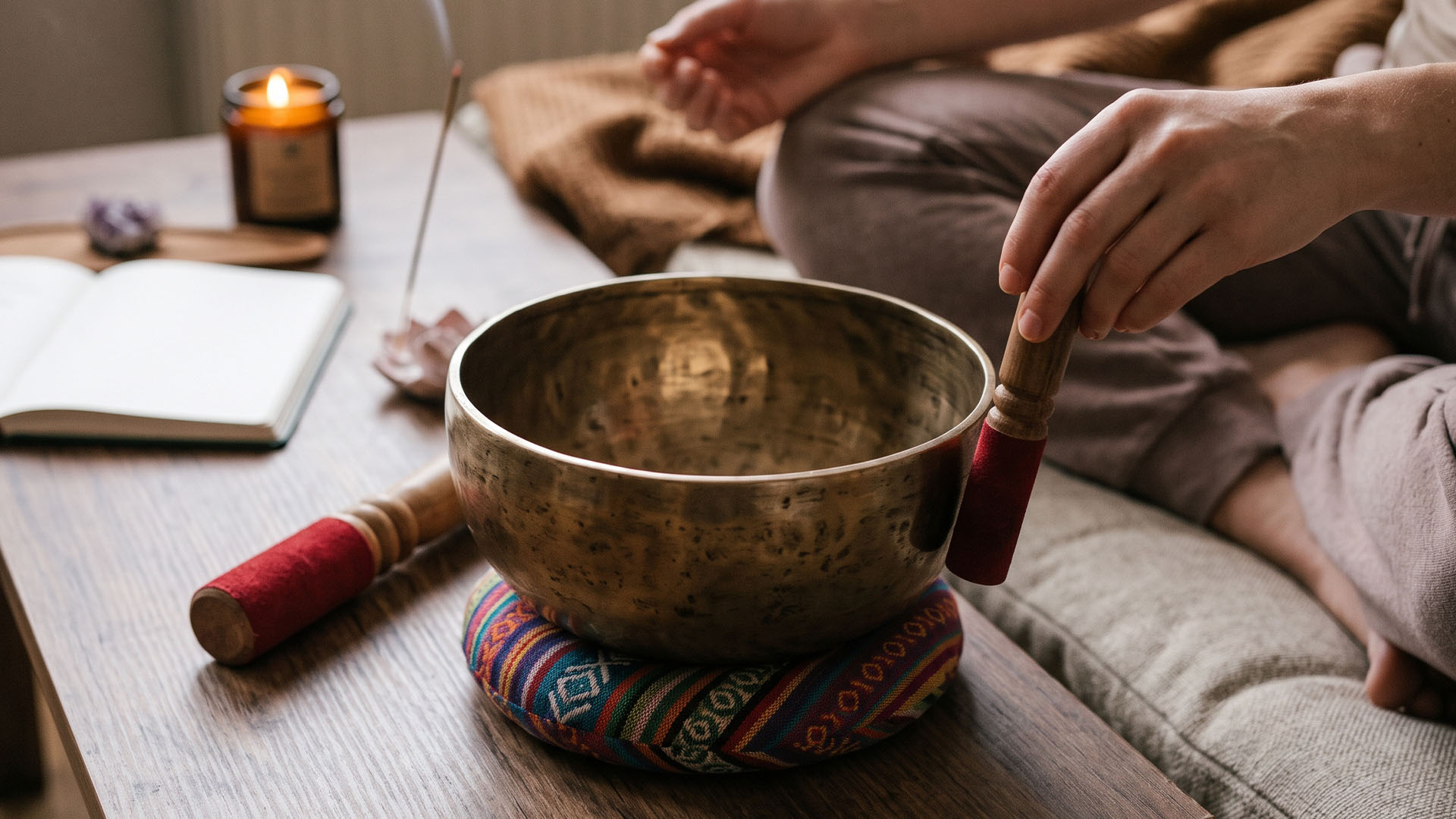
- Mark the beginning and the end. Strike a Tibetan singing bowl once as you start and once as you finish. The fading tone naturally slows your breathing and turns five minutes into a small meditation.
- Remind yourself during the day. A small object you see often helps, such as a rosewood Japa Mala bracelet. Each time you glance at it, try to notice one good thing. Your mind won't be blank when evening comes.
- Go easy on yourself on bad days. A gratitude journal isn't forced positivity. If the day was hard, write that down, then add one small thing, like a hot shower. It counts.
- Look back once a month. Read your older entries. You'll be surprised how many good moments you would have forgotten.
- A missed day isn't the end. If you skip an entry, don't try to catch up. Just carry on the next evening.
Start tonight
You don't need to buy anything to begin. Grab a notebook from the drawer, sit down for five minutes and write three good things about today. If you'd like to make the moment a little more special, put together a small evening set: one candle or pack of incense you keep only for journaling, plus a bookmark for your notebook.
And if you're already thinking about Christmas: a gratitude journal makes a lovely gift. A blank notebook, the Gratitude bookmark, a scented candle, and on the first page your own entry about why you're grateful for the person receiving it. For more ideas, browse our incense gift sets, or let them choose for themselves with a SHANTI gift card.
Gratitude isn't about everything being fine. It's about finding something warm even in the darkness of November. Not sure which scent or candle to choose? Write to us and we'll be happy to help.
Gratitude journal FAQ
What should I write in a gratitude journal?
Three to five specific things you were grateful for that day, each with a short note on why it happened. If nothing comes to mind, pick one of the prompts above.
How often should I write in a gratitude journal?
Start with every evening for one week. Then choose a rhythm you won't get tired of. Some people get more out of one longer weekly entry than a short daily one.
Is it better to write in the morning or in the evening?
In the evening you can look back on the whole day, and writing helps you wind down before sleep. In the morning it sets your attention on the good from the start. What matters most is when you can do it consistently.
Paper journal or app?
Both work, but paper gives you calm without notifications. Writing by hand also slows you down, so you spend a little longer with each item.
How long does it take for a gratitude journal to work?
Research on the three good things exercise shows a measurable shift after just one week of daily writing. The effect is gradual and modest, and you'll notice it most when you reread older entries.
What if I'm having a bad day and can't think of anything good?
Write that the day was hard, then add one small thing: the warmth under a blanket, a cup of tea, the voice of someone close. A gratitude journal isn't meant to replace your feelings, just to make sure the good doesn't get lost.


 Kaloud
 KLIFIDES
 marvin smoke
 DARKSIDE